Why Plumbers Need a Website (Not Just a Facebook Page)
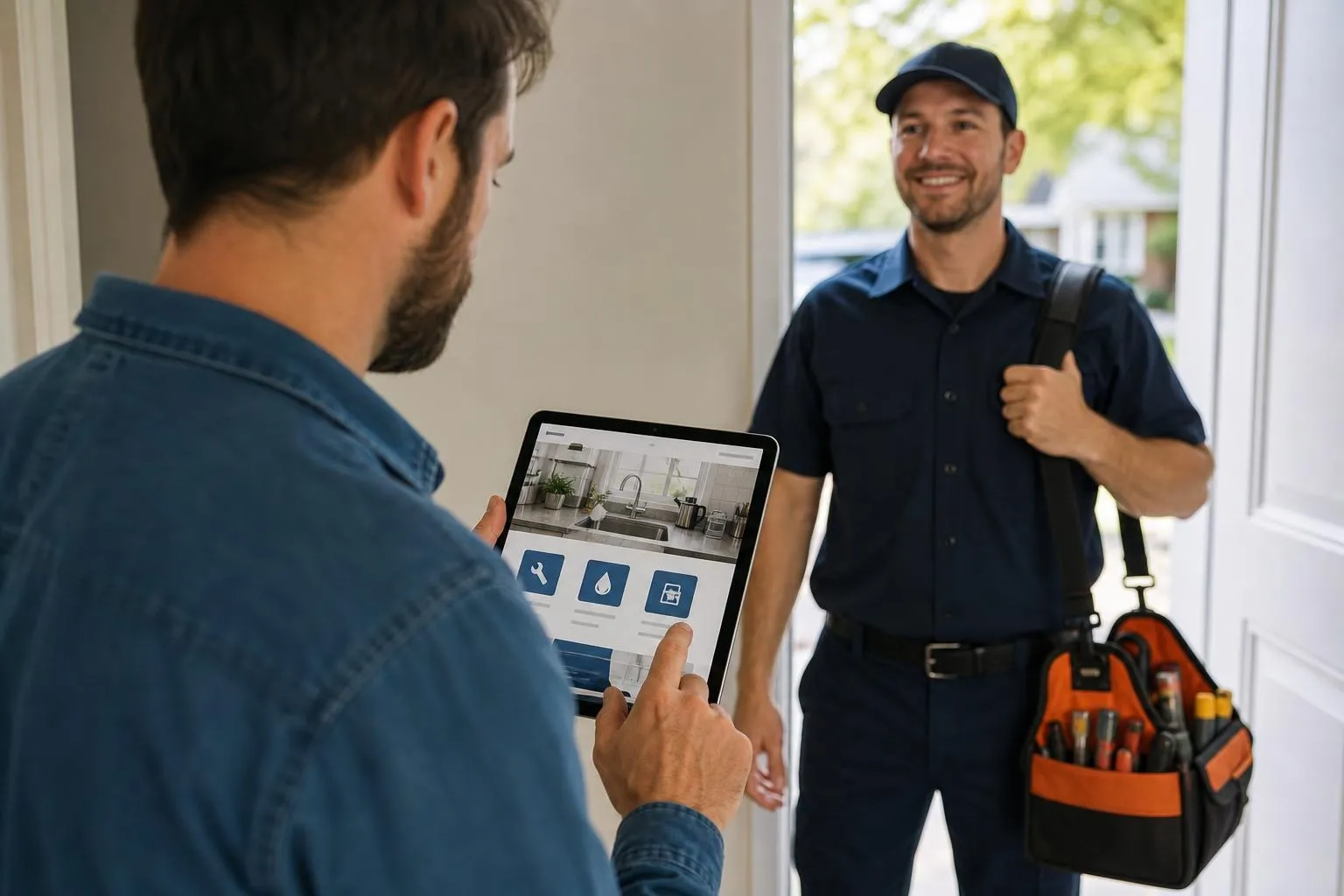
A plumber who does great work shouldn’t have to rely on a social media algorithm to get found. Yet thousands of plumbing businesses across the UK treat their Facebook page as their entire online presence, posting the occasional job photo and hoping the phone rings. Here’s the problem: Facebook isn’t designed to help someone find a plumber at 2 a.m. when their kitchen is flooding. Google is. And Google wants to send that panicked homeowner to a website, not a social media profile. The question of why plumbers need a website rather than just a Facebook page isn’t about being anti-social media. It’s about understanding where your customers actually look when they need you most. A Facebook page can be part of your marketing mix, but it was never meant to be the foundation. If you’re running a plumbing business and your only digital presence is a social profile, you’re leaving money on the table every single day. The customers who can’t find you are finding your competitors instead, and those competitors almost certainly have a proper website. Here’s what that difference actually looks like in practice.
The Limitations of Social Media for Professional Services
Facebook is brilliant for staying in touch with past customers and building community awareness. But it fails as a primary business platform for one critical reason: it wasn’t built for that purpose. Facebook’s goal is to keep users scrolling through their feed, not to connect them with a local plumber. The platform decides who sees your posts, when they see them, and whether your business page gets any visibility at all. Organic reach for business pages has dropped below 5% in most cases, meaning if you have 500 followers, fewer than 25 of them will see any given post. That’s not a marketing strategy. That’s a lottery.
The Risk of Rented Land and Algorithm Changes
Your Facebook page exists on someone else’s property. Meta can change the rules whenever it wants, and it does, regularly. In 2024, Meta shifted its algorithm to prioritise content from friends and family over business pages, and many small businesses saw their reach drop overnight. If Facebook decided tomorrow to charge £200 per month for business page visibility, or to shut down business pages entirely, you’d have nothing. No customer list, no content archive, no online presence. A website you own is an asset. A Facebook page is a rental agreement with no tenant protections.
Fragmented Information and Lack of Structure
Try finding a plumber’s service area, pricing guidance, or emergency contact number on their Facebook page. You’ll scroll through months of posts, shared memes, and customer comments before you find anything useful. Facebook doesn’t let you organise information the way a website does. There’s no services page, no dedicated contact form, no structured FAQ section. Potential customers who land on your Facebook page have to work to find what they need, and most of them won’t bother. They’ll hit the back button and click on the next result, which is usually a competitor with a proper website.
Establishing Authority and Professional Credibility
First impressions happen fast. Research from Stanford’s Web Credibility Project found that 75% of people judge a business’s credibility based on its website design. A plumbing business without a website immediately looks less established than one with a clean, professional site. Homeowners are letting you into their homes and trusting you with expensive repairs. They want reassurance that you’re legitimate, and a Facebook page with a few photos doesn’t provide that.
Building Trust Through a Branded Experience
A website gives you complete control over how your business is presented. Your logo, your colours, your messaging, your story. You can include an “About Us” page that explains your experience, a gallery of completed projects, and detailed descriptions of every service you offer. This branded experience tells potential customers that you take your business seriously. Compare that to a Facebook page where your branding competes with ads, notifications, and suggested posts from competitors. On your own website, the customer’s attention is entirely on you.
Showcasing Licences, Certifications, and Insurance
Plumbing is a trade where credentials matter. Customers want to know you’re Gas Safe registered, properly insured, and qualified. A website lets you display these credentials prominently, with badge images, registration numbers, and links to verification pages. You can dedicate an entire section to your qualifications. On Facebook, you might mention these in your bio or a pinned post, but they get buried quickly. A website keeps your most important trust signals visible on every page.
Capturing Local Intent with Search Engine Optimisation
Here’s where the real money is. When someone searches “emergency plumber near me” or “boiler repair in Manchester,” Google serves up websites, not Facebook pages. Local SEO is the single most valuable marketing channel for plumbers, and you can’t do local SEO without a website. According to BrightLocal’s 2025 consumer survey, 98% of consumers used the internet to find local businesses, and 87% of those searches started on Google. If you don’t have a website, you’re invisible during the exact moment a customer is ready to hire you.
Ranking for Emergency Plumbing Keywords
Emergency calls are the highest-value jobs for most plumbers. Someone with a burst pipe at midnight isn’t browsing Facebook. They’re typing “emergency plumber” into Google and calling the first number they find. A website with pages targeting specific emergency keywords, like “burst pipe repair,” “blocked drain emergency,” or “no hot water fix,” can rank for these searches and deliver calls directly to your phone. Each service page acts as a separate entry point from Google. A Facebook page gives you one shot at appearing in search results. A website gives you dozens.
The Synergy Between Websites and Google Business Profiles
Your Google Business Profile is the box that appears in local map results, and it’s essential for plumbers. But Google Business Profiles perform significantly better when they’re linked to a website. Google uses your website content to understand what services you offer and where you operate. A plumber with a detailed website listing services in specific neighbourhoods will consistently outrank a competitor whose Google Business Profile links to a Facebook page. The two work together: your website provides depth, and your Google profile provides local visibility.
Streamlining Customer Conversions and Lead Generation
Getting found is only half the battle. Converting a visitor into a paying customer requires a clear path from “I need a plumber” to “I’ve booked a plumber.” Websites are designed for exactly this kind of conversion flow. Facebook isn’t.
Online Booking and Service Request Forms
A website can include a booking form that captures the customer’s name, address, problem description, and preferred time slot. This information goes straight to your inbox, ready for you to respond. Better still, a proper booking system lets customers pick from your actual availability and get an automatic confirmation, without a phone call — that’s what our Booking module adds to any plan for £29/month, with calendar sync and no per-booking commission. This matters because a growing number of customers, particularly younger homeowners, prefer to book services online rather than by phone. Facebook Messenger exists, but it’s informal, unreliable for notifications, and doesn’t integrate well with how you actually run your diary.
Automated Reviews and Customer Testimonials
Reviews are the lifeblood of local service businesses. A website lets you display your best Google and Checkatrade reviews in a dedicated testimonials section, curated and formatted for maximum impact. You can also automate the ask: send a review request by email or SMS after every completed job, something that’s nearly impossible to do through Facebook alone (and exactly what our Review Management module does for £49/month, review widget included). A testimonials page on your website serves as permanent social proof, visible to every visitor. Facebook reviews exist, but they’re mixed in with other content and harder for potential customers to find and trust.
Full Control Over Analytics and Marketing Data
One of the biggest advantages of owning a website is the data it generates. Facebook gives you basic page insights, but the data belongs to Meta, not you. A website with Google Analytics installed gives you detailed information about who visits your site, what they look at, and what actions they take.
Tracking User Behaviour and High-Value Pages
With Google Analytics 4, you can see exactly which pages drive the most enquiries, how long visitors spend on your site, and where they drop off. If your “boiler installation” page gets 300 visits per month but only 5 enquiries, you know the page needs work. If your “emergency plumber” page converts at 15%, you know to invest more in ranking for those keywords. This kind of insight is impossible with a Facebook page. You’re essentially marketing blind, with no way to measure what’s working and what’s wasting your time.
Retargeting Visitors with Precision Advertising
When someone visits your website but doesn’t call, you can retarget them with ads on Facebook, Instagram, and Google. A small piece of tracking code on your website lets you show ads specifically to people who’ve already shown interest in your services. This is incredibly cost-effective. Instead of paying to advertise to everyone in your area, you’re only paying to reach people who’ve already visited your site. Retargeting typically costs £0.50 to £2.00 per click, compared to £5 to £15 for cold traffic in the plumbing sector. Without a website, retargeting isn’t possible.
Future-Proofing Your Plumbing Business Growth
A website isn’t just a marketing tool for today. It’s the foundation for everything you’ll want to do as your business grows. Want to expand into a new service area? Add a location page. Want to hire apprentices? Add a careers page. Want to offer boiler service plans? Add a dedicated page with a payment link. None of this is possible with a Facebook page alone.
The plumbers who are thriving in 2026 aren’t choosing between a website and social media. They’re using both, with the website as the hub and social media as a spoke. Your website is where serious customers land, where Google sends traffic, and where you control the experience from first click to booked job.
If you’re still relying solely on a Facebook page, the fix is simpler than you think. We build websites for tradespeople — mobile-first, local-SEO-ready, with click-to-call and a proper enquiry form — live in a matter of days, from £59 per month with hosting, maintenance, and security included, no lock-in, and your domain registered in your name. That’s less than the margin on a single boiler callout, and the return, measured in customers who would never have found you on Facebook, pays for itself within weeks. Stop renting your online presence. Talk to us and get found on Google.